About Us
2026 LED High Bay Lights Industry Trends: Why It’s Time to Upgrade Your Industrial Lighting
Views : 584
Update time : 2026-05-09 15:40:34
In the fast-paced world of industrial and commercial lighting, LED High Bay Lights have evolved from a cost-saving alternative to a strategic infrastructure asset, driving efficiency, safety, and sustainability across global facilities. As 2026 unfolds, the global LED High Bay Lights market is projected to grow at a CAGR of 7.8%, reaching USD 7.80 billion by 2034, fueled by stringent energy regulations, technological innovation, and the rising demand for smart, durable lighting solutions in high-ceiling spaces. For warehouse managers, manufacturing plant operators, and facility directors, understanding the latest industry trends and the unique value of LED High Bay Lights is critical to staying competitive, reducing operational costs, and meeting sustainability goals.
What Are LED High Bay Lights, and Why Do They Matter?
LED High Bay Lights are specialized lighting fixtures designed to illuminate large, high-ceiling spaces—typically those with ceilings 8 meters or higher—including warehouses, manufacturing facilities, logistics centers, gymnasiums, exhibition halls, and port terminals. Unlike traditional lighting solutions such as metal halide (HID) or fluorescent lamps, modern LED High Bay Lights are engineered to deliver superior brightness, energy efficiency, and durability, addressing the unique challenges of industrial environments where lighting performance directly impacts safety, productivity, and operational costs.
The shift from traditional lighting to LED High Bay Lights is no longer a choice but a necessity. Industrial lighting has transcended mere "light replacement" to become a core component of digital manufacturing, energy management, and workplace safety—with LED High Bay Lights at the forefront of this transformation. Whether you’re retrofitting an existing facility or building a new one, upgrading to LED High Bay Lights offers measurable benefits that directly impact your bottom line.
2026 Key Trends Shaping the LED High Bay Lights Industry
The LED High Bay Lights market is rapidly evolving, driven by technological advancements, policy pressures, and changing industry needs. Here are the most impactful trends defining the industry in 2026:
1. Smart Control & IoT Integration: From Fixtures to Connected Assets
The biggest shift in 2026 is the transformation of LED High Bay Lights from passive fixtures to connected,>The benefits are substantial: smart LED High Bay Lights can reduce energy consumption by an additional 60% compared to standard LED fixtures, thanks to features like occupancy sensing (dimming or turning off lights in unoccupied areas) and daylight harvesting (adjusting brightness based on natural light). They also integrate seamlessly with building management systems (BMS) and HVAC systems, enhancing overall facility automation and efficiency.
2. Human-Centric Lighting (HCL): Prioritizing Worker Safety & Productivity
2026 sees a growing focus on human-centric lighting (HCL) in industrial spaces, with LED High Bay Lights designed to support worker health and productivity rather than just illuminating spaces. Advanced LED High Bay Lights now feature tunable white technology (3000K–6500K), allowing facilities to adjust light color temperature based on the time of day or task type—mimicking natural daylight to reduce fatigue, especially in 24/7 operations like warehouses and manufacturing plants.
Additionally, high Color Rendering Index (CRI ≥ 90) and low Unified Glare Rating (UGR) optics ensure accurate color perception and reduce glare on reflective surfaces (such as metal or glass), improving visual clarity and reducing errors in quality control and picking operations. Studies show that HCL-enabled LED High Bay Lights can boost productivity by 5–10% and reduce accident rates in high-risk areas like forklift routes or assembly lines.
3. Enhanced Durability & Environmental Adaptability
Industrial environments are harsh—dust, vibration, chemical fumes, extreme temperatures, and moisture all pose threats to lighting fixtures. In 2026, LED High Bay Lights are engineered with extreme durability in mind, featuring IP65–IP69K sealing to block dust, moisture, and high-pressure cleaning (critical for food processing plants and mines), IK10 impact resistance to withstand forklift collisions or hail, and operating temperature ranges from -50°C to +85°C (suitable for cold storage facilities and desert warehouses).
For corrosive environments like ports, chemical plants, or coastal facilities, LED High Bay Lights are now equipped with anti-corrosion and salt雾-resistant coatings, ensuring long-term reliability even in harsh conditions. Explosion-proof variants (Ex d IIC T6) are also becoming standard in high-risk areas like refineries and paint shops, meeting strict safety regulations.
4. Energy Efficiency & Sustainability: Driven by Policy & Cost Savings
Global efforts to reduce carbon emissions and rising energy costs are accelerating the adoption of energy-efficient LED High Bay Lights. Modern LED High Bay Lights offer luminous efficacy of 150–200 lumens per watt (lm/W)—a significant leap from traditional metal halide lamps (70–100 lm/W)—meaning they produce more light with less energy consumption. This translates to 60–70% energy savings compared to traditional lighting, drastically reducing monthly electricity bills for large facilities.
Policy pressures are also driving adoption:汞 bans and RoHS regulations are phasing out HID and fluorescent lamps, while EU and US carbon neutrality commitments require facilities to meet measurable energy-saving targets. LED High Bay Lights not only help facilities comply with these regulations but also support sustainability goals by reducing carbon footprints and minimizing waste (thanks to their long lifespan).
LED High Bay Lights vs. Traditional Lighting: A Clear Choice
Despite the clear advantages of LED High Bay Lights, many facilities still rely on traditional lighting solutions like metal halide or fluorescent lamps. The table below highlights the key differences, showing why LED High Bay Lights are the superior choice for modern industrial spaces:
Feature | LED High Bay Lights | Traditional Metal Halide/Fluorescent |
|---|---|---|
Luminous Efficacy | 150–200 lm/W | 70–100 lm/W |
Lifespan | 50,000–100,000 hours | 10,000–20,000 hours |
Warm-Up Time | Instant (no warm-up) | 5–15 minutes |
Maintenance | Minimal (annual inspections only) | Frequent (bulb/ballast replacement) |
Energy Savings | Up to 70% | None (high energy waste) |
Durability | IP65–IP69K, IK10, corrosion-resistant | Low (susceptible to dust, moisture, vibration) |
Choosing the Right LED High Bay Lights for Your Facility
With the variety of LED High Bay Lights available in 2026, selecting the right fixture depends on your specific facility needs. Here are the key factors to consider:
1. Ceiling Height & Space Size
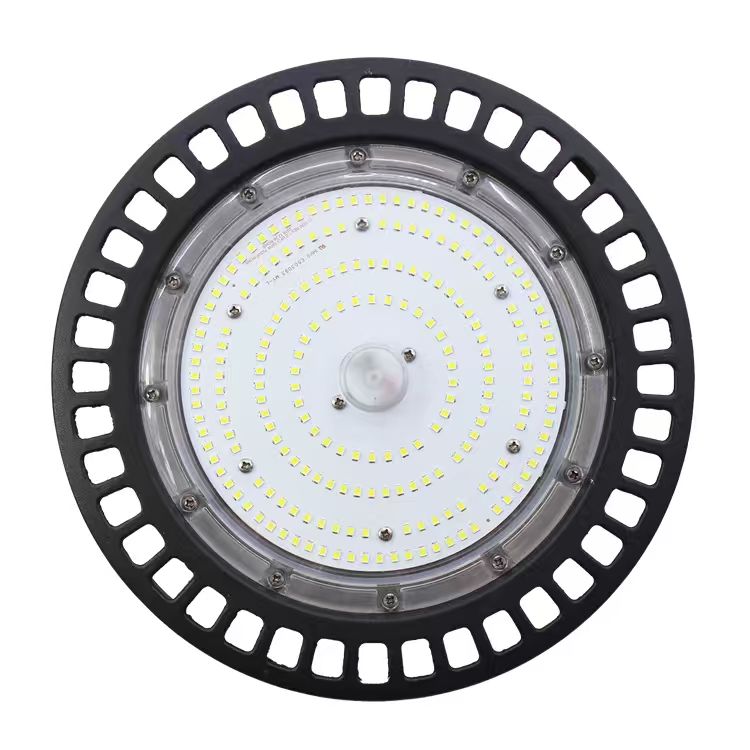
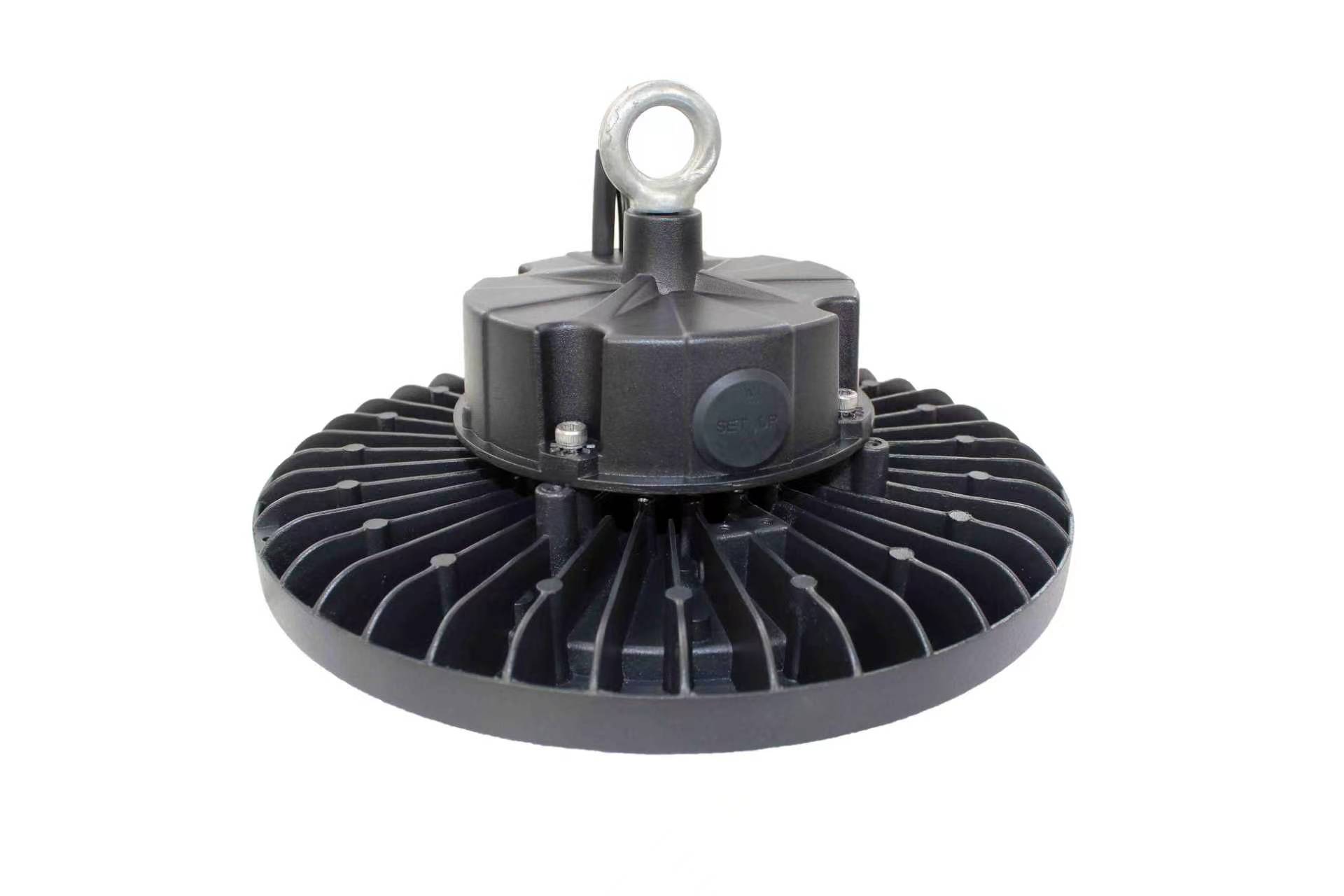
LED High Bay Lights are designed for ceilings 8 meters and above; for lower ceilings (4–6 meters), low bay lights are more suitable. For large open spaces like warehouses or manufacturing plants, UFO LED High Bay Lights (compact, round design) offer wide, uniform coverage, while linear LED High Bay Lights are ideal for aisle-style warehouses with tall shelving, as they distribute light in a rectangular pattern aligned with racking systems.
2. Lumen Output & Beam Angle
Lumen output determines the brightness of the fixture—larger spaces require higher lumen outputs (15,000–40,000 lumens). Beam angle is also critical: narrower angles (15°–60°) are ideal for focused lighting on specific areas (e.g., production lines), while wider angles (90°–120°) provide uniform coverage for open spaces. Modular lenses allow for adjustable beam angles, offering flexibility for different space layouts.
3. Environmental Conditions
Consider the harshness of your environment: facilities with dust, moisture, or chemical fumes require IP65+ rated fixtures, while coastal or corrosive environments need anti-corrosion coatings. Cold storage facilities should choose LED High Bay Lights with a wide operating temperature range (-50°C to +85°C) to ensure reliable performance in low temperatures.
4. Smart Features & Control Options
If energy efficiency and automation are priorities, opt for LED High Bay Lights with smart features like motion sensors, daylight harvesting, or IoT connectivity. These features not only reduce energy costs but also simplify facility management by allowing remote control and predictive maintenance.
Real-World Impact: LED High Bay Lights in Action
A global automotive零部件制造商 with a 12,000-square-meter facility recently upgraded from 400–600W metal halide lamps to 150–200W LED High Bay Lights, resulting in a 48% reduction in energy consumption and a 22% decrease in production defects (thanks to improved lighting quality). The facility also saw a 47% reduction in eye fatigue complaints and a 15% drop in夜班 absenteeism, highlighting the dual benefits of cost savings and improved worker well-being.
Another example: a logistics warehouse with 10-meter ceilings replaced 220 traditional HID lamps with LED High Bay Lights, reducing monthly lighting costs by 66% and eliminating the need for frequent bulb replacements—saving over 100 hours of maintenance time per year. The investment paid for itself in just 1.5 years, with ongoing savings directly boosting profitability.
The Future of LED High Bay Lights: What to Expect Beyond 2026
As technology continues to advance, the LED High Bay Lights industry will see further innovations, including even higher luminous efficacy (exceeding 220 lm/W), more advanced AI-driven control systems, and integration with renewable energy sources (e.g., solar power). The market will also see a growing focus on circular economy principles, with manufacturers designing fixtures for easy recycling and component replacement, further reducing environmental impact.
For facility managers, the message is clear: upgrading to LED High Bay Lights is no longer just a cost-saving measure—it’s a strategic investment in efficiency, safety, and sustainability. With the global market growing rapidly and policy pressures increasing, now is the time to make the switch.
Final Thoughts
LED High Bay Lights have revolutionized industrial lighting, offering unparalleled energy efficiency, durability, and smart capabilities that traditional lighting simply cannot match. In 2026, as the industry continues to evolve, these fixtures will play an even more critical role in helping facilities meet their operational, safety, and sustainability goals.
Whether you’re looking to reduce energy costs, improve worker productivity, comply with regulations, or future-proof your facility, LED High Bay Lights are the solution. By choosing the right fixture for your space and leveraging the latest technological advancements, you can unlock significant savings and gain a competitive edge in today’s fast-paced industrial landscape.